What is a Drive Sprocket?
Sprockets are rotating parts with teeth that are used in conjunction with a chain to transmit power. In order for sprockets and chain to be compatible with each other they must both have the same thickness and pitch. In order for the sprockets and chain to work effectively, all of the sprockets should be on parallel shafts with their corresponding teeth on the same plane.
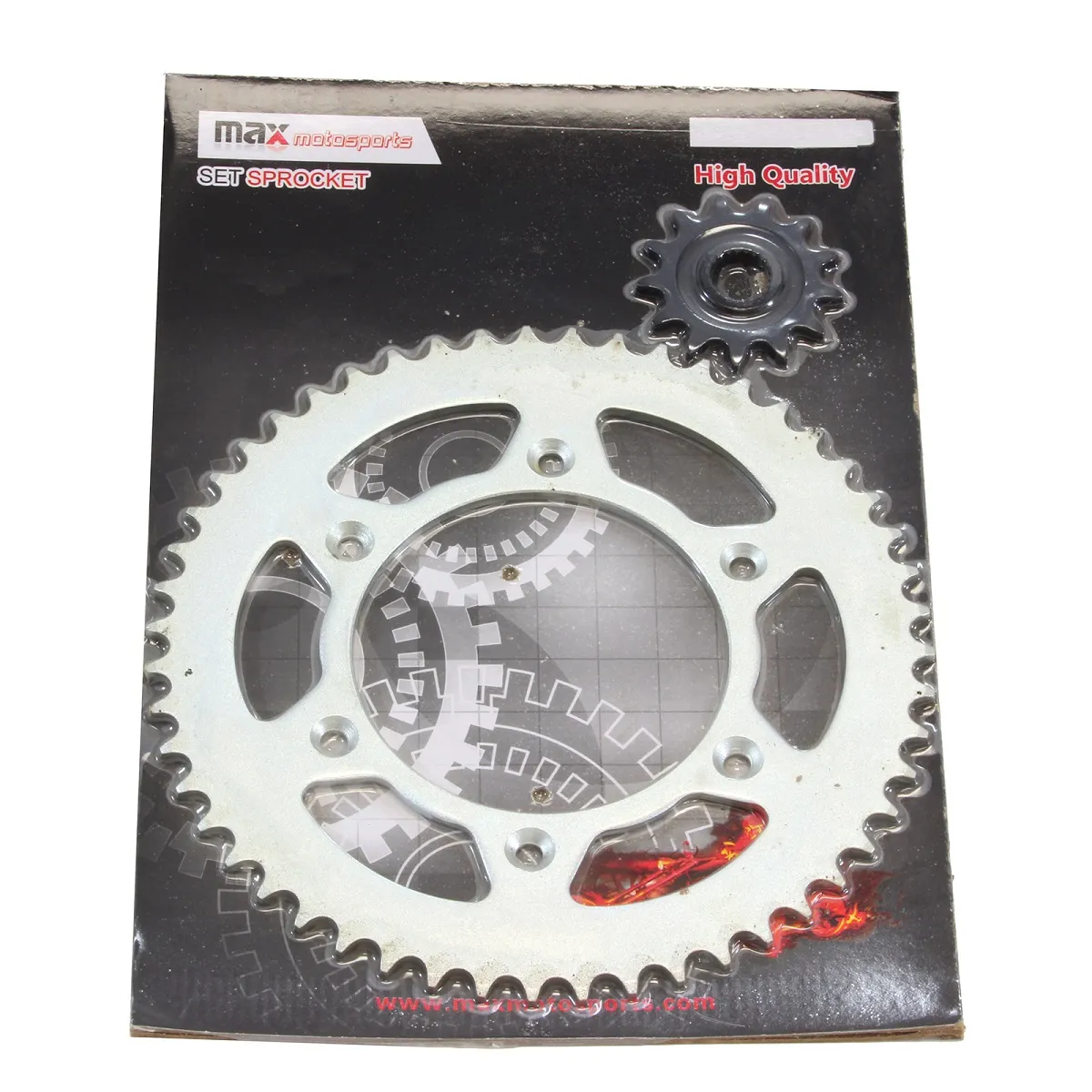
Parts of a Sprocket
-Number of Teeth - The total number of teeth (projections) around the whole circumference of a sprocket
-Pitch Diameter (PD) - An imaginary circle which is traced by the center of the chain pins when the sprocket rotates while meshed with a chain
-Pitch - The amount of pitch diameter in inches per tooth. Gears with a larger pitch will have bigger teeth
When to Replace Sprockets?
-Check how well the chain meshes with the sprocket teeth. In a healthy chain and sprocket combo, the individual chain rollers align perfectly with the spaces between the sprocket teeth and fit down into those U-shaped grooves evenly
-Look closely at the sprocket teeth to see if they have become sharp at the tips and/or slightly curled. The teeth on a new sprocket are straight and have a flat or domed shape at the tip, If the teeth are sharp, the sprocket is worn.
Should Chain And Sprockets Be Replaced Together On A Motorcycle?
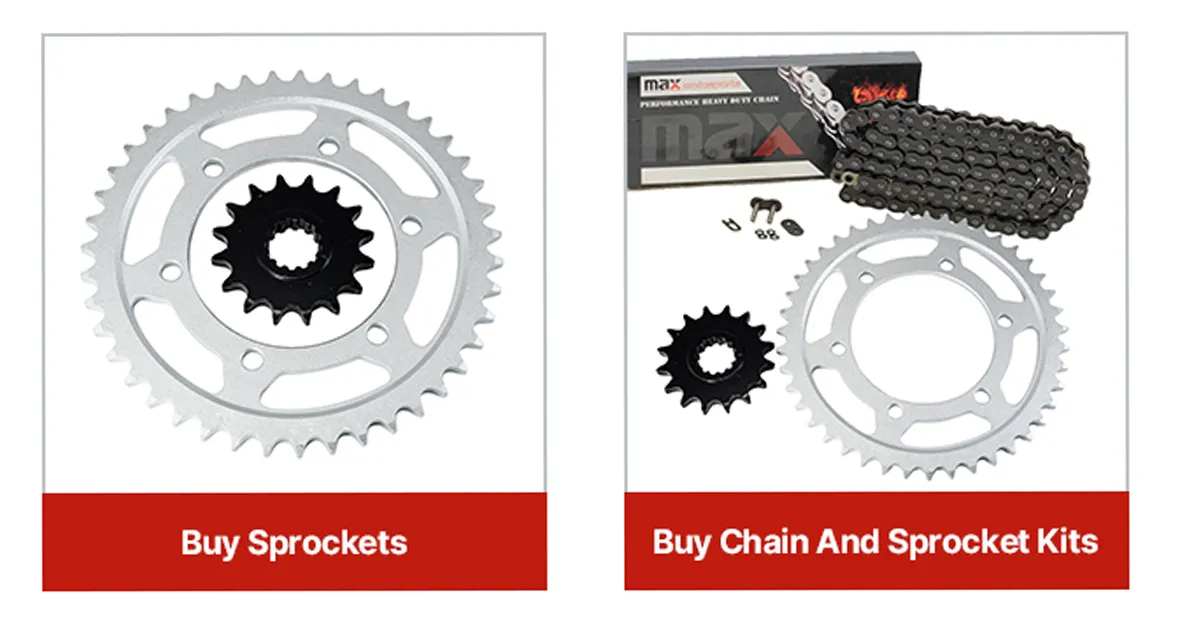
Yes, it is necessary to change the chain and sprockets at the same time, as replacing just one will cause premature wear on the new component and lead to poor performance. A worn sprocket will damage a new chain, and a worn chain will quickly wear down new sprockets, so replacing them together ensures the entire system is new and allows for even wear.
Recomman Reading: Why You Should Replace Your Chain And Sprockets Together
How Sprocket Tooth Count Affects Performance
Changing sprocket tooth count alters how your bike delivers power:
More rear teeth / fewer front teeth:
Faster acceleration, better low-speed control, reduced top speed
Fewer rear teeth / more front teeth:
Higher top speed, lower RPM at cruising speeds, slower acceleration
Choosing the right setup depends on riding style—street, off-road, racing, or utility use.
Why Choose a Chain and Sprocket Kit
Single Component Replacement vs. Complete Kit
Comparison Item | Replacing Only One Part | Replacing a Chain and Sprocket Kit |
Component Matching | New and worn parts don’t mesh well | All parts are properly matched |
Wear & Lifespan | Uneven wear, shorter service life | Even wear, longer service life |
Performance | More vibration and rough power delivery | Smooth and stable power transfer |
Long-Term Value | Higher cost due to repeat replacements | Lower overall cost over time |
Sprocket & Chain Maintenance Tips
Keep sprockets in good condition and properly aligned for smooth performance.
Use a chain lubricant specifically designed for your type of chain.
Avoid harsh cleaners or chemicals such as benzene or gasoline — use only mild degreasers or dedicated chain cleaners.
Lubricate your chain every 300–350 miles, or more often in wet or dusty conditions.
If the chain contacts battery acid, replace it immediately.
If exposed to salt water or road salt, clean and re-lubricate after drying.
Upgrade with Max Motosports Chain and Sprocket Kit
For riders who want reliability, smooth performance, and long-term value, upgrading to a Max Motosports Chain and Sprocket Kit is the smart choice.
Each kit is designed for precise fitment and durability, delivering:
Smoother acceleration
Reduced vibration and noise
Precise power transfer
Longer service life
Replace your drivetrain the right way—and enjoy a quieter, more confident ride.